
Choose & use a backpack
Seven tips so that a child carries the school backpack without straining the back.
Carrying books and stationery causes constant concern in the educational community — educators, parents, students — as well as in the medical world, as children carry heavier and heavier backpacks to and from school every day.
This concern has long been POLO’s too: for years it has specialised in protecting children’s physical health, and in particular the musculoskeletal system. Taking into account studies of the American Academy of Pediatrics, the Ministry of Education’s announcements and orthopaedic research, POLO recommends:
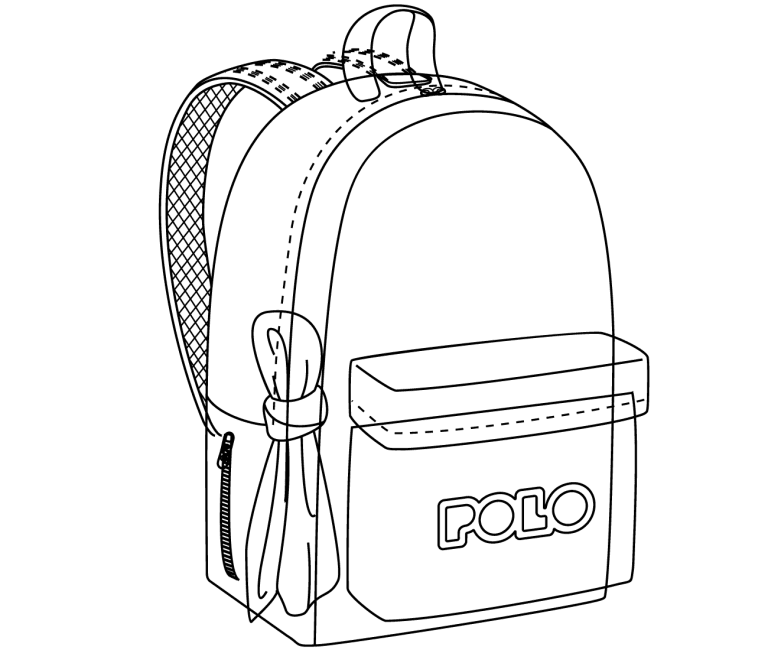
15% of the child’s weight
The weight of the school bag should not exceed 15% of the child’s body weight. If it is heavier, POLO recommends a trolley backpack.

-
The shoulder straps should have an inner lining, even on single compartment backpacks, so that the weight is evenly distributed. They should always be worn on both shoulders, for an even load and the proper posture of the body.

-
The backpack should sit at the centre of the waist and fit the back and the pelvis as closely as possible. Its content should be sorted evenly, with heavy objects placed close to the back.

-
It is good for the backpack to have a chest strap, for the correct posture and proper breathing, and, if it is large, a waist strap that moves weight to the pelvis, off the shoulders and the spine — as POLO’s multi compartment backpacks do.
-
The use of individual lockers at school, if there are any, is important: they keep what is not needed at home. Students should pack their bag every day according to the timetable, to carry as little as possible.
-
The way the backpack is lifted matters: bend the knees, or place the backpack on a higher point (a desk, for example), and then put it on.
-
Parents should not neglect complaints of back pain. In such a case they should consult the paediatrician, an orthopaedic specialist or a physiotherapist.
The above instructions are purely advisory: not following them does not necessarily mean a problem. In many cases, though, they prevent fatigue, neck, shoulder and back pain, and the classic lower back pain syndrome.
POLO designs backpacks that match what children and teenagers want — and does not stop at looks: it focuses on accredited materials and specialised design, for the quality, comfort, safety and protection of its young and grown-up friends.
